
AMR Trends in the Asia-Pacific Region
Antimicrobial resistance is becoming an increasing concern in companion-animal medicine across the Asia-Pacific, with veterinarians reporting more recurrent and difficult-to-treat infections. Recent studies have documented the rise of multidrug-resistant organisms such as ESBL-producing E. coli, MRSA, and MRSP in Thailand, Korea, and Malaysia, indicating a growing presence of resistant pathogens in dogs and cats (Satchasataporn et al., 2025; Seo et al., 2025; Afshar et al., 2023).
A major contributor to this trend is the reliance on empirical antibiotic prescribing, driven by limited access to rapid diagnostic testing and low awareness of proper antibiotic use among pet owners. Research from Korea and Singapore shows that broad-spectrum antibiotics are often prescribed in the absence of timely AST results, reinforcing patterns that accelerate resistance (Kim et al., 2025). These challenges highlight the need for practical in-clinic tools that enable faster, evidence-based treatment decisions.
Insights from Korean Veterinary Industry Leaders
Mr. Kevin Ha, Vice President of PostBio Co., Ltd
During the interview, Mr. Kevin Ha shared that antibiotic misuse is becoming increasingly serious in veterinary hospitals, similar to trends seen in human medicine. He explained that when antibiotic susceptibility testing is not performed, veterinarians often choose stronger antibiotics because they cannot confirm which drugs are effective.
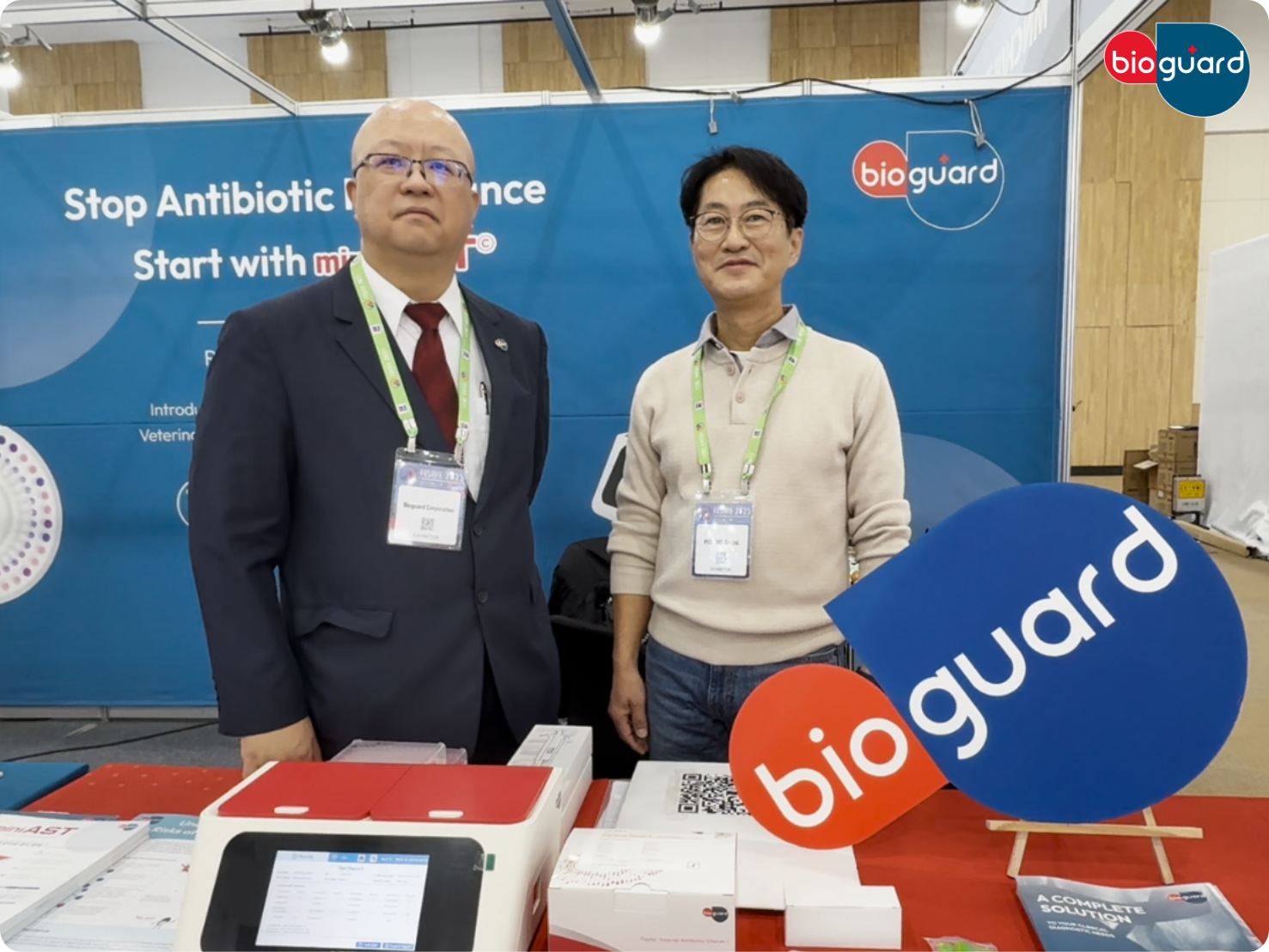
Antibiotic abuse is becoming more serious in the animal hospital market. When antibiotic testing is not done, strong antibiotics are often prescribed, and I believe this problem will continue to become more serious.
Upon being introduced to miniAST, he expressed strong optimism. He emphasized that traditional AST required 4–6 days, while miniAST provides results much more quickly.
When I first saw miniAST, I thought, "This is the product I’ve been looking for." It was impressive and hopeful. Previously, AST took at least 4-6 days, but with this product, the results come out very fast. It is extremely helpful, and we have high expectations.
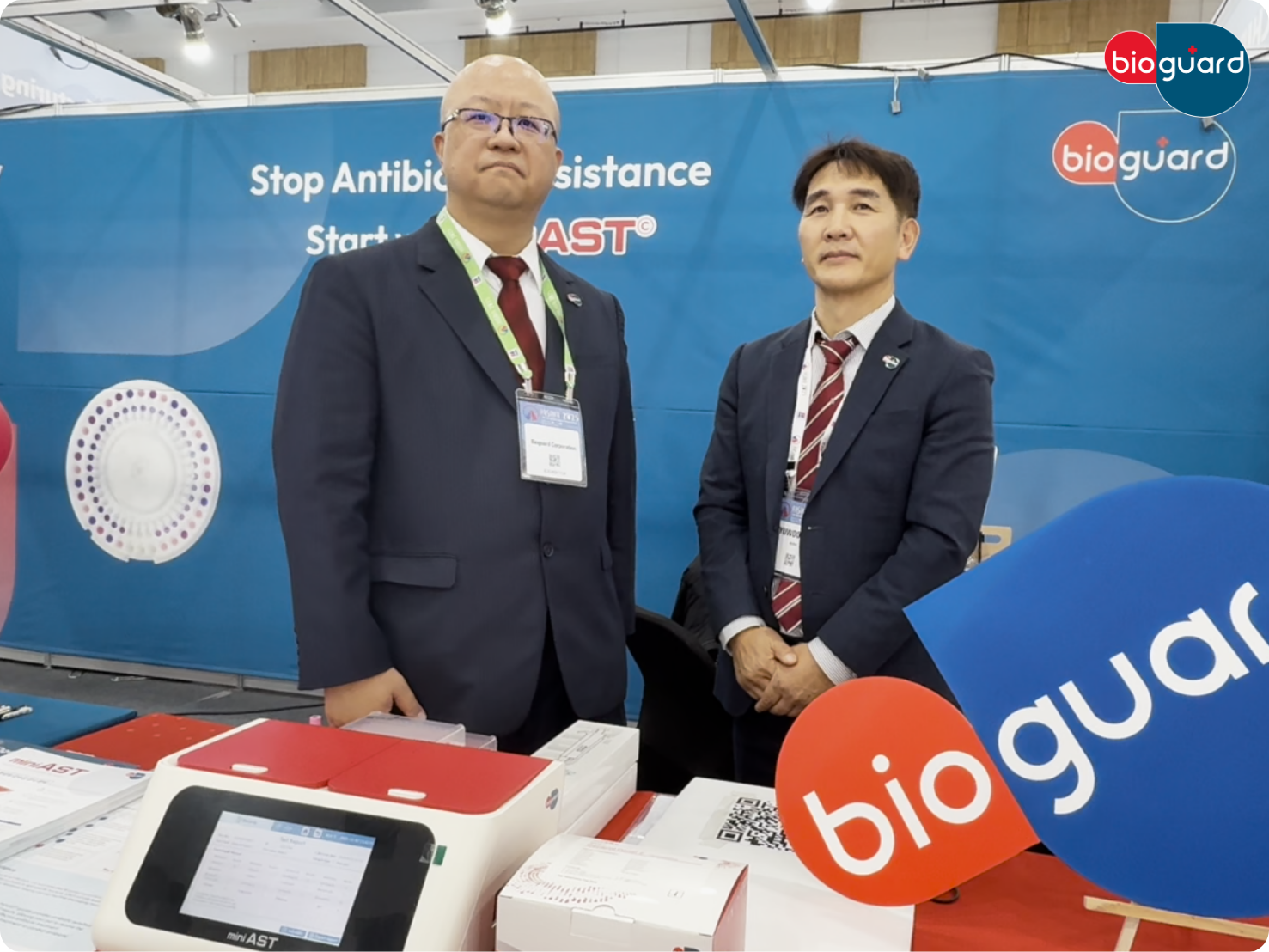
Dr. Kyu Wook Kim, President of Solvet, Inc.
Dr. Kim highlighted the growing global threat of antimicrobial resistance and referenced a widely cited projection. He stressed that antibiotics must be used carefully.
As far as I know, by 2050, AMR is expected to cause more deaths than cancer. Antibiotics should be used properly and responsibly. They should not be used indiscriminately as they often are now.
When he first saw miniAST, he was surprised by its speed and practicality.
I was very surprised. In the past, sending samples to a lab service took about 5–6 days including preparation, but miniAST provides results in about six hours. It is extremely efficient, and I believe equipment like this is absolutely necessary for the health of both humans and animals.
Dr. Kim also noted that the adoption of such devices in Korean clinics is steadily increasing, and broader use will help reduce unnecessary antibiotic prescriptions.
If these devices become more widely used, we can reduce unnecessary antibiotic use and lower AMR-related risks.
Antimicrobial Resistance in the Republic of Korea
Antimicrobial resistance (AMR) represents an important public health concern in Korea, where antibiotic consumption remains relatively high. According to the OECD, the daily defined doses of antibiotic prescriptions per 1,000 population in the Republic of Korea are among the highest reported across OECD member countries, indicating a potential risk for the development and spread of antimicrobial resistance (OECD, 2023; OECD, 2025).
In response to AMR, the Republic of Korea established the First National Action Plan on Antimicrobial Resistance (2016–2020) based on the WHO Global Action Plan on AMR. This national strategy adopted a multi-sectoral approach encompassing human health, animal health, food safety, and environmental sectors. Within the animal health sector, key measures have included the strengthening of AMR surveillance systems and the introduction of antimicrobial stewardship program (ASP) pilot projects, aimed at promoting appropriate antimicrobial use and reducing antimicrobial resistance.

The One Health AMR concept, which connects human, animal, and environmental health, has gained increasing attention across medical, veterinary, and environmental communities in the Republic of Korea. Korean veterinary medical societies have made significant efforts to minimize the potential impact of animal antimicrobial use on public and animal health. Studies and professional discussions indicate that many Korean veterinarians recognize the risks associated with the misuse or overuse of antibiotics and are considering the development of improved guidelines and regulatory measures.
About the miniAST Veterinary AST Analyzer
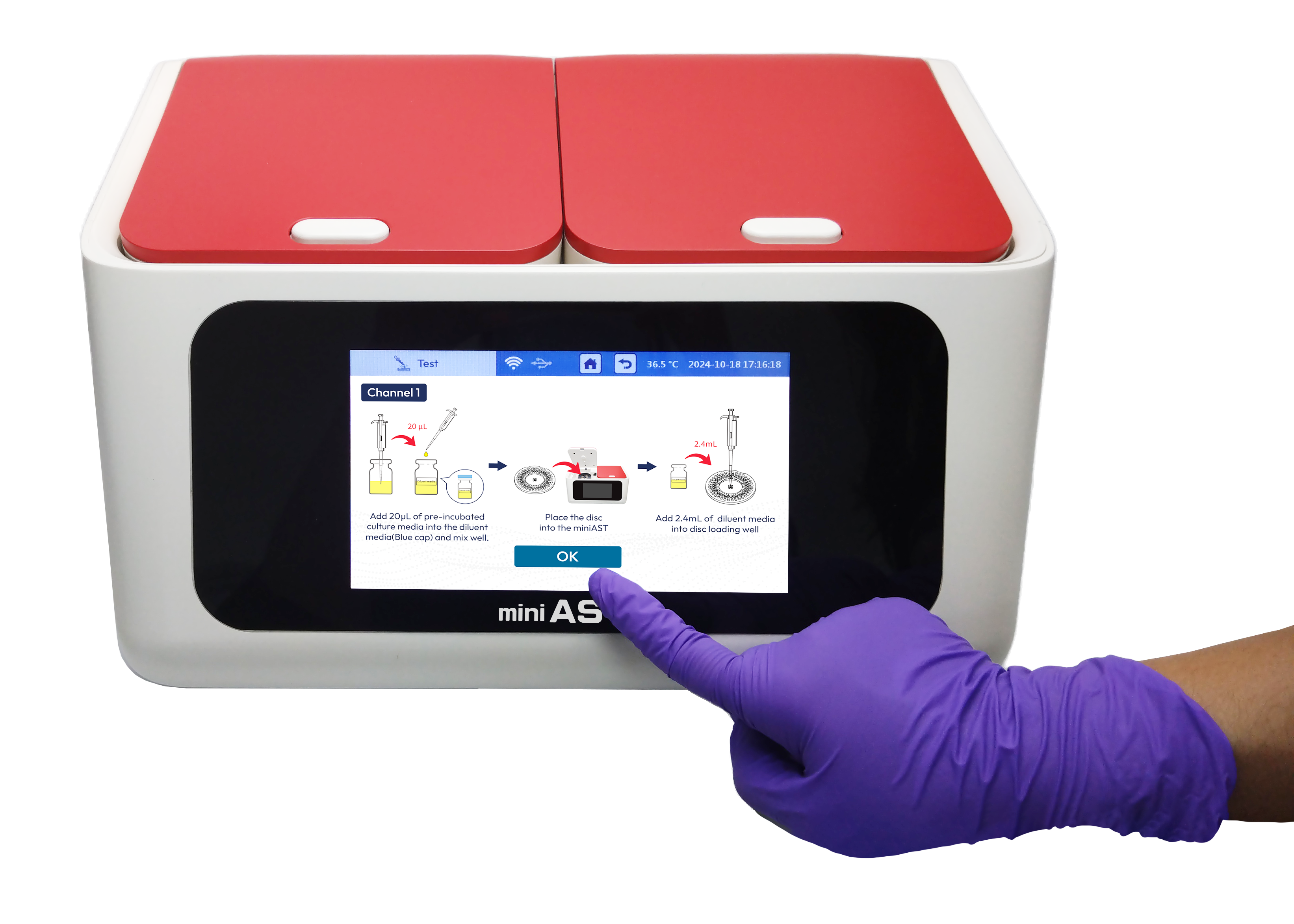
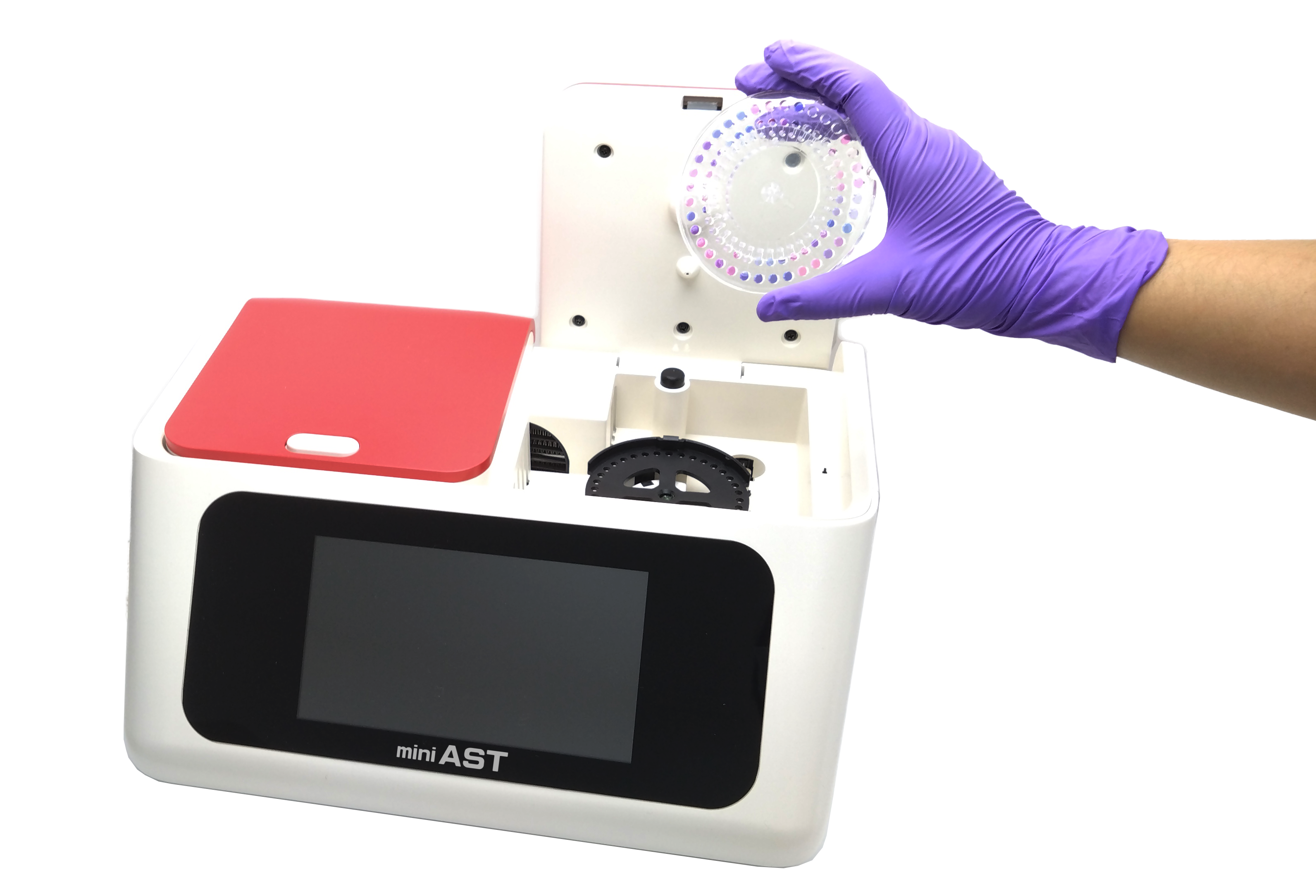
The Bioguard miniAST Veterinary Antibiotic Susceptibility Test Analyzer is an automated system designed specifically for veterinary antimicrobial susceptibility testing.
It provides:
- Categorical susceptibility results (susceptible, intermediate, resistant)
- Automated interpretation to minimize human error
- Results within approximately six hours, enabling same day therapeutic adjustments
- Standardized, reproducible data to guide confident antibiotic selection
By shortening the time between diagnosis and targeted therapy, miniAST helps veterinary clinics avoid unnecessary or ineffective antibiotic use, supporting responsible antimicrobial stewardship and improving clinical outcomes.
References
Afshar, M. F., Zakaria, Z., Cheng, C. H., & Ahmad, N. I. (2023).
Prevalence and multidrug-resistant profiles of methicillin-resistant Staphylococcus aureus and methicillin-resistant Staphylococcus pseudintermedius in dogs, cats, and pet owners in Malaysia. Veterinary World, 16(3), 536–545.
https://doi.org/10.14202/vetworld.2023.536-545
Kim, B., Kim, Y. J., & Lee, H. (2025).
National action plan on antimicrobial resistance in the Republic of Korea: Progress and challenges. Infection & Chemotherapy, 57(1), 1–12.
https://doi.org/10.3947/ic.2025.0028
Kim, S.-M., Kim, H.-S., Kim, J.-W., & Min, K.-D. (2025).
Assessment of antimicrobial use for companion animals in the Republic of Korea: Developing defined daily doses and investigating veterinarians’ perception of antimicrobial resistance. Animals, 15(2), 260.
https://doi.org/10.3390/ani15020260
Lee, J., Kim, D., & Choi, Y. (2025).
Antimicrobial use and resistance in companion animals in Korea. Animals, 15(2), 260.
https://www.mdpi.com/2076-2615/15/2/260
Organisation for Economic Co-operation and Development. (2023).
Health at a glance 2023: OECD indicators. OECD Publishing.
https://www.oecd.org/en/publications/health-at-a-glance-2023_8f9e3f98-en.html
Organisation for Economic Co-operation and Development. (2025).
Health at a glance 2025. OECD Publishing.
https://www.oecd.org/en/publications/health-at-a-glance-2025_8f9e3f98-en.html
Park, Y. H. (n.d.).
One Health approach to antimicrobial resistance in Korea [Conference presentation]. Centre for Health Protection.
https://www.chp.gov.hk/files/pdf/amrhk_5_3_prof_park_yh_korea.pdf
Seo, Y.-R., Choi, S.-Y., Kim, S., Kang, K.-S., Ro, C.-S., & Hyeon, J.-Y. (2025).
Antimicrobial resistance profiles of Staphylococcus spp. and Escherichia coli isolated from dogs and cats in Seoul, Republic of Korea, 2021–2023. Frontiers in Veterinary Science, 12, 1563780.
https://doi.org/10.3389/fvets.2025.1563780
Satchasataporn, K., Khunbutsri, D., Chopjitt, P., Sutjarit, S., Pan-Utai, W., & Meekhanon, N. (2025).
Antimicrobial resistance patterns of ESBL-producing Escherichia coli in dogs from Thailand: Evaluation of algal extracts as novel antimicrobial agents. Antibiotics, 14(4), 377.
https://doi.org/10.3390/antibiotics14040377
World Organisation for Animal Health. (2024, March 25).
Advancing the WOAH strategy against antimicrobial resistance.
https://www.woah.org
World Organisation for Animal Health. (n.d.).
Laboratory training on AMR surveillance in terrestrial and aquatic food animals in Korea.
2024 Lab Training: AMR Surveillance in Terrestrial and Aquatic Food Animals
Food and Agriculture Organization of the United Nations, & World Health Organization. (n.d.).
Antimicrobial resistance.
https://www.fao.org/fao-who-codexalimentarius/thematic-areas/antimicrobial-resistance/en/
Korea Disease Control and Prevention Agency. (n.d.).
National action on antimicrobial resistance.
https://www.nih.go.kr/nohas/en/common/main.do