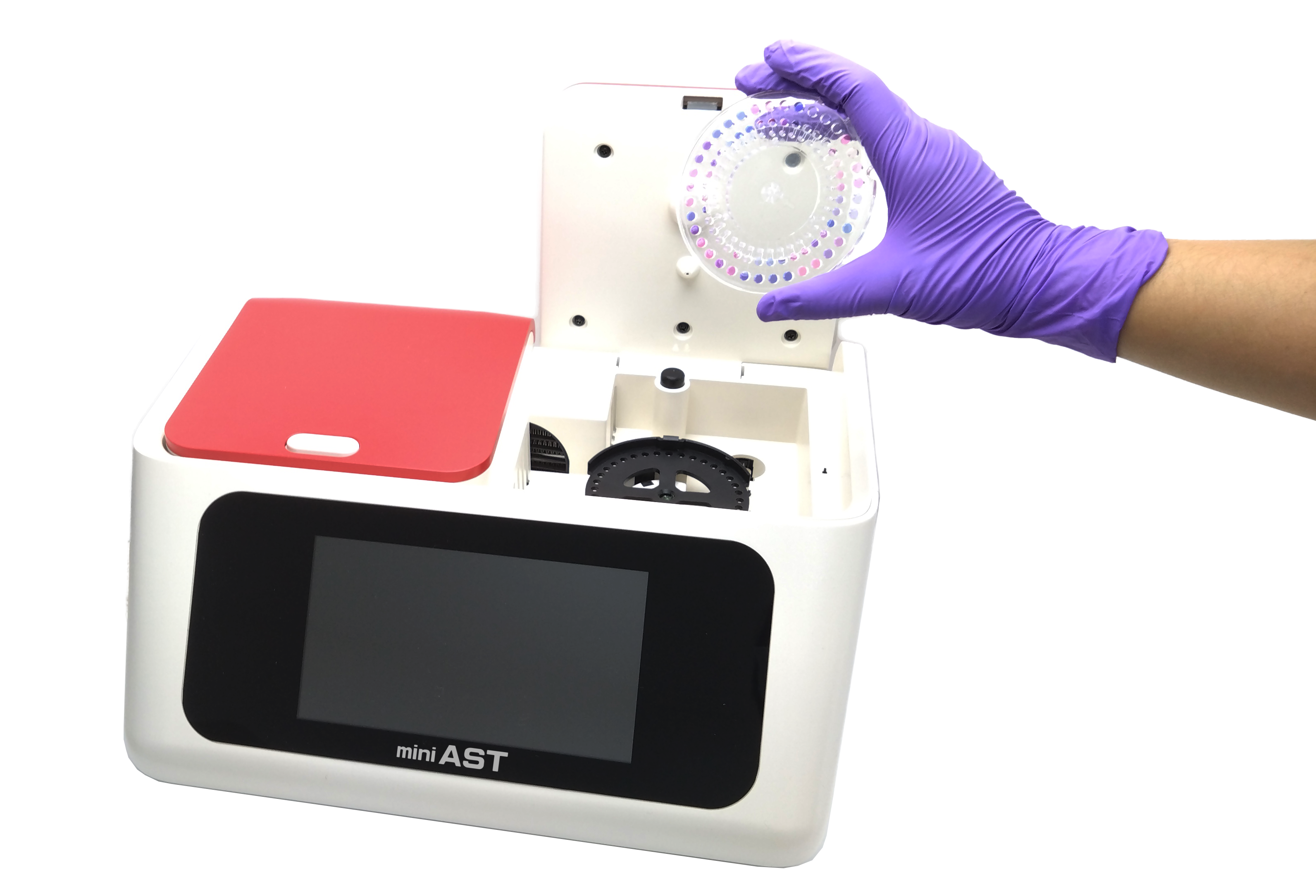
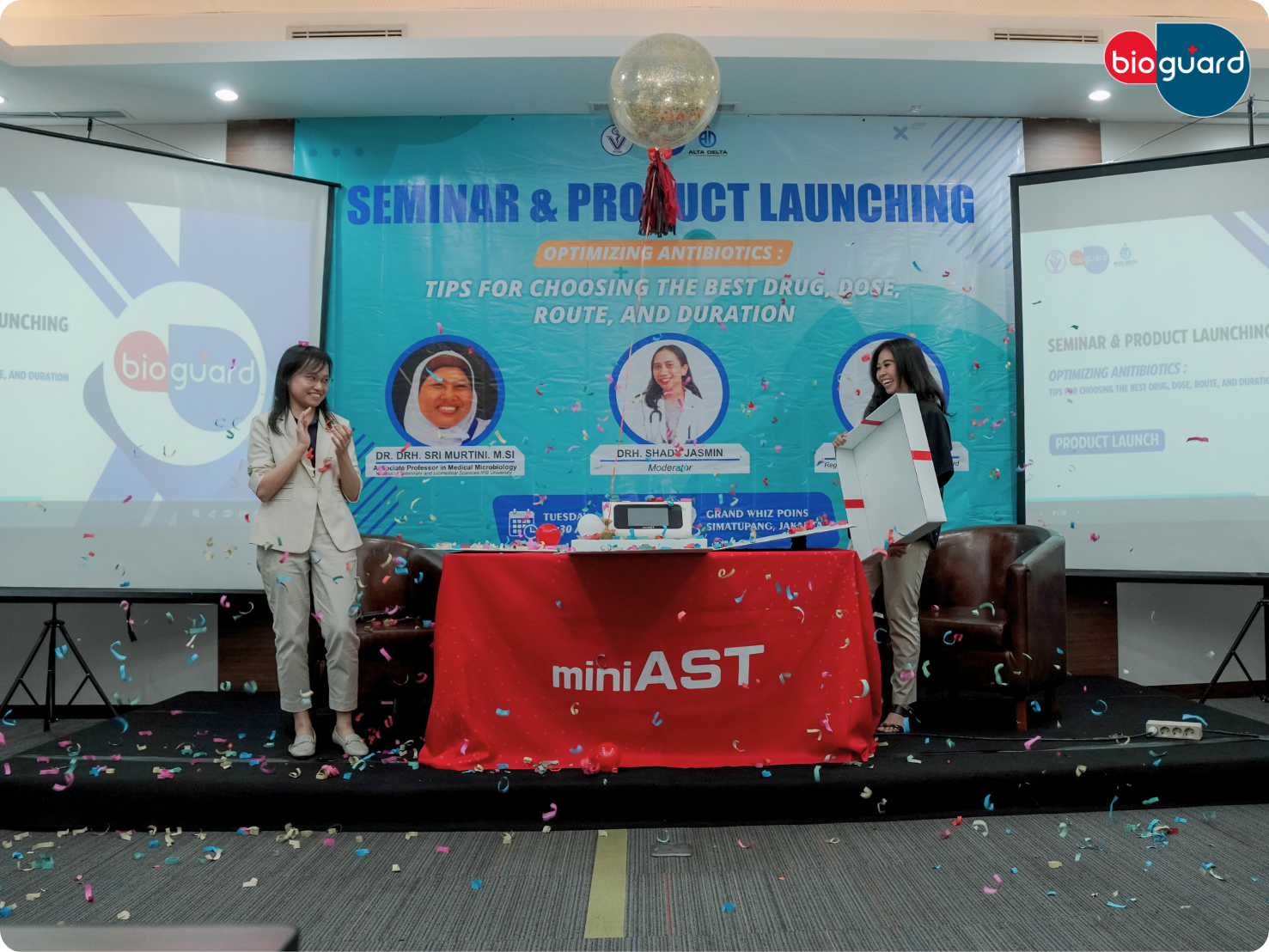




In Jakarta, Indonesia, Bioguard launched the miniAST Veterinary Antibiotic Susceptibility Test Analyzer during the seminar “Optimizing Antibiotics: Tips for Choosing the Best Drug, Dose, Route, and Duration”, attended by Indonesian veterinarians, showcasing its commitment to evidence-based antimicrobial use.
At the seminar, veterinarians were introduced to miniAST, a compact, clinic-friendly analyzer designed to make antibiotic susceptibility testing faster and more accessible. Bioguard demonstrated how miniAST can deliver susceptibility results in as little as 6 hours, with accuracy up to 92% compared to traditional disc diffusion, all while fitting seamlessly into standard small-animal clinic workflows.
Interactive Discussions and Q&A
Following the product presentation, participants engaged in interactive discussions and a Q&A session. Topics included strategies for choosing the right drug, optimizing dose and duration, and improving stewardship in environments where empirical antibiotic use is still common. This exchange allowed veterinarians to explore practical approaches for reducing antimicrobial resistance (AMR) in companion animals while integrating new diagnostic tools like miniAST into their clinics.
AMR Trends in Southeast Asia
Antimicrobial resistance is an emerging challenge in companion-animal medicine across Southeast Asia, with veterinarians reporting an increase in recurrent and difficult-to-treat infections in dogs and cats. Studies from countries including Thailand, Singapore, Malaysia, and Indonesia have identified multidrug-resistant organisms such as ESBL-producing Escherichia coli and methicillin-resistant Staphylococcus species (MRSA, MRSP) in companion animals. Limited access to routine antibiotic susceptibility testing means that antibiotic treatment is often empirical, with broad-spectrum antibiotics commonly used as first-line therapy. Combined with variable awareness of appropriate antibiotic use among pet owners, these factors contribute to sustained selection pressure and the continued spread of resistant bacteria, underscoring the need for improved stewardship and accessible in-clinic diagnostics.
Antimicrobial Resistance (AMR) in Indonesia
Antimicrobial resistance (AMR) is an increasing concern in Indonesia, driven by widespread antimicrobial use across human health, veterinary practice, and agriculture. Antibiotics critical to human medicine, including penicillins, tetracyclines, fluoroquinolones, and sulfonamides, are commonly used in animal health, often prescribed empirically due to limited access to routine diagnostics and antimicrobial susceptibility testing (AST). Studies have reported multidrug-resistant bacteria in production animals, companion animals, and stray populations, underscoring the risk of resistance transmission across sectors.

Indonesia has responded through the National Action Plan on AMR (NAP AMR) 2020–2024, aligned with the WHO Global Action Plan and based on a One Health approach. The strategy promotes coordinated action across human, animal, food, and environmental sectors, with support from FAO, WHO, and WOAH. Key actions include restrictions on antibiotic growth promoters, strengthened AMR surveillance, increased private-sector engagement, and policies encouraging responsible antimicrobial use.
Despite progress at the national level, challenges remain in implementation at local and clinical levels. Limited diagnostic capacity, uneven adoption of antimicrobial stewardship practices, and fragmented surveillance systems continue to drive reliance on broad-spectrum antibiotics. Expanding access to veterinary diagnostics, strengthening stewardship, and improving cross-sector data integration are essential to sustaining AMR control and protecting both animal and public health in Indonesia.
Future Commitment to Veterinary Experts
By showcasing miniAST at the Veterinary Seminar in Jakarta, Indonesia, we continue our mission of advancing veterinary diagnostics across ASEAN and beyond. In clinical settings where empirical antibiotic use is still common, miniAST provides veterinarians with fast, actionable antibiotic susceptibility results, helping them make more confident and precise treatment decisions. By reducing reliance on broad-spectrum antibiotics, it integrates precision prescribing into everyday practice, addressing the unique challenges ASEAN veterinarians face while promoting responsible antibiotic stewardship and improving patient care.
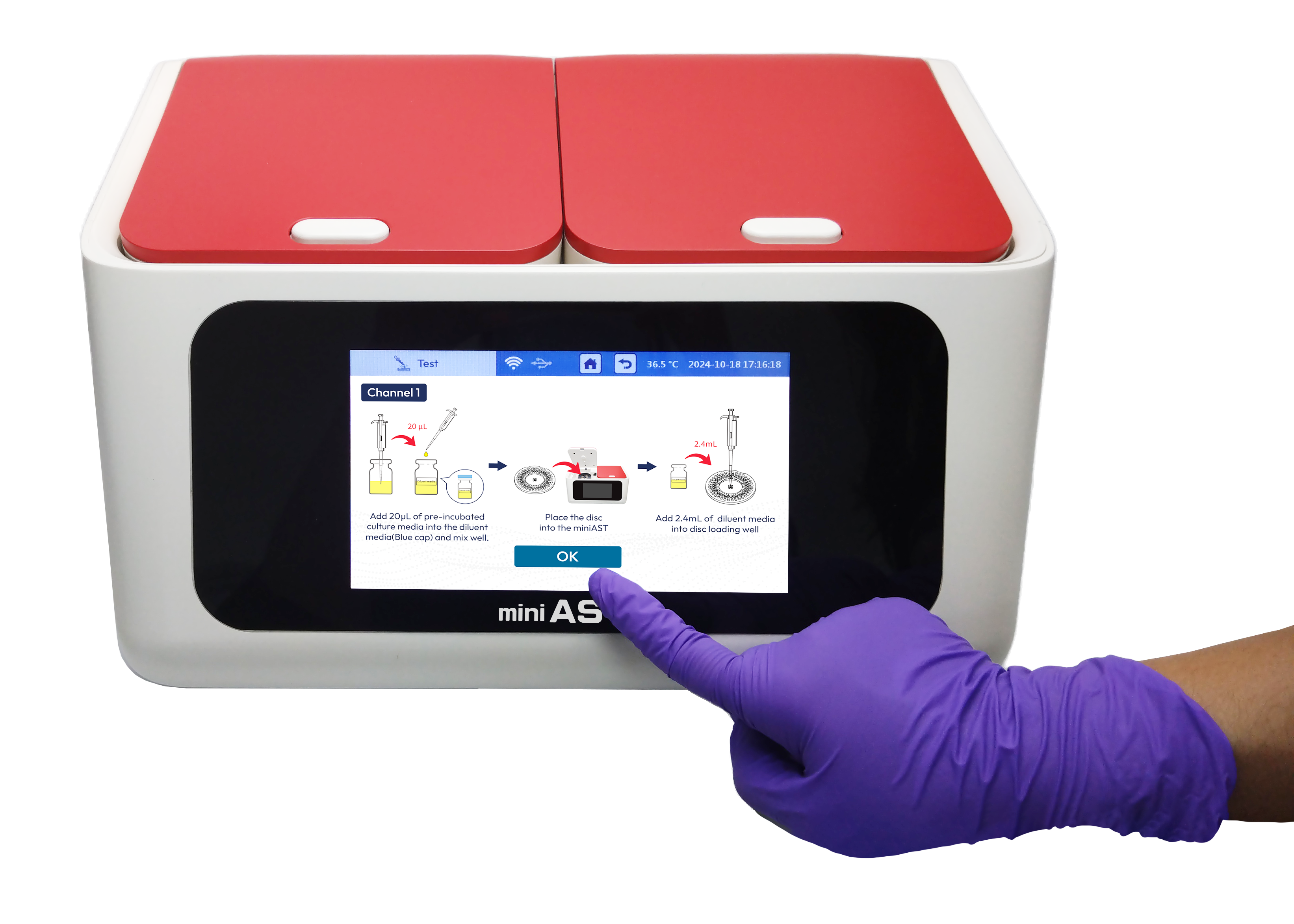
The miniAST Veterinary Antibiotic Susceptibility Test Analyzer, is a solution designed to help combat antibiotic resistance with game-changing features:
Feature & Benefit
Feature | Benefit |
Fast Results | Get results in just 6 hours, enabling swift and confident treatment. |
Automated Interpretations | Instantly deliver precise susceptibility profiles, supporting faster, more informed clinical decisions and optimizing patient care. |
Dual-Sample Testing | Double the efficiency with simultaneous analysis of two samples at once. |
High Accuracy | Achieve an impressive 92% accuracy rate compared to traditional disc diffusion tests. |
📌 Note for Veterinarians:
The miniAST Veterinary Antibiotic Susceptibility Test Analyzer is available exclusively to licensed veterinarians and veterinary hospitals.
📩 How to Order miniAST
To purchase miniAST or request a quotation, please contact our sales team or email our customer service:
📧 service@bioguardlabs.com
Please include your hospital name and contact number so our sales representative can follow up with you directly.
Stay connected with Bioguard!
Follow us on social media to get the latest product updates, educational content, webinar info, and event news:
- Instagram: @bioguard.animalcare
- Facebook: @bioguardca
- LinkedIn: @bioguardtaiwan