
Boxer Dog Health Guide: Genetics, Disease Risks, and PCR Diagnostics
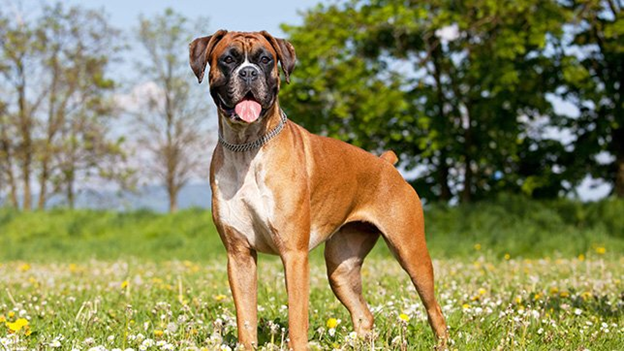
Table of Contents 1. Introduction Overview of the Boxer Breed The Boxer breed originated in late 19th-century Germany through the deliberate cross-breeding of the Bullenbeisser, a traditional large hunting breed, with the English Bulldog and other breeds. The goal was to produce an athletic, versatile working dog with a stable temperament. Historically used for hunting large game, Boxers were introduced to the United Kingdom in the 1930s and have since remained popular as both working and companion dogs. Physically, Boxers are medium-large, muscular dogs with a short coat and a moderately brachycephalic skull. Their distinctive features include a muzzle approximately one-third the length of the head, a broad upper jaw, an undershot lower jaw, and long, straight limbs. Common coat colors are fawn and brindle, with roughly 10% of Boxers being white. Modern Boxers are celebrated for their friendly, energetic, and curious temperament, although studies indicate that some may exhibit protective or guarding behaviors, and male Boxers may have a higher propensity for aggression, which should be monitored. Importance of Breed-Specific Disease Knowledge Awareness of breed-specific health risks is critical for owners, breeders, and veterinarians. Understanding the Boxer’s unique health profile enables the development of Breed Health and Conservation Plans, prioritizing conditions such as cancer, cardiac disorders, and Degenerative Myelopathy (DM). For breeders, this knowledge informs responsible breeding decisions that can reduce inherited disease prevalence. Owners and veterinarians benefit from early recognition of clinical signs, such as fainting or sudden death associated with Arrhythmogenic Right Ventricular Cardiomyopathy (ARVC), which can allow life-saving interventions before severe disease progression. Modern Diagnostic Tools Early detection and monitoring of Boxer-specific diseases have been greatly enhanced by modern diagnostic tools: DNA Testing: Enables identification of genetic risk factors. For Boxers, tests are available for ARVC1 and ARVC2 gene variants, as well as the SOD1A mutation linked to Degenerative Myelopathy, classifying dogs as clear, carriers, or at-risk. Holter Monitoring: A 24-hour Holter monitor is the gold standard for detecting ARVC, capturing intermittent ventricular premature complexes (VPCs) that may be missed in a standard ECG. Echocardiography with Doppler: Provides detailed visualization of heart structures and blood flow, essential for diagnosing Subaortic Stenosis (SAS) and other valvular conditions. 2. History and Origins The Boxer breed was developed in late 19th-century Germany through the deliberate cross-breeding of the traditional large hunting breed Bullenbeisser with English Bulldogs and other breeds. The goal was to produce an athletic working dog with a stable temperament. Originally bred for hunting and guarding, the Boxer was first officially registered in the United Kingdom in 1939 and has since evolved into a highly popular family companion, valued for both intelligence and character. Over time, specific physical and behavioral traits were emphasized to define the breed: Strength and Agility: Boxers are medium-large, muscular dogs with an athletic, square build, well-developed muscles, and high endurance. Playful Temperament: Known for being curious, lively, and energetic, Boxers retain their playful nature well into adulthood. They are also widely regarded as sweet-tempered and high-spirited, making them engaging companions for families. Loyalty and Trainability: Boxers are eager to please, respond well to consistent training, and thrive on positive reinforcement, often appearing proud and satisfied when praised. Courage and Protective Instincts: While naturally sociable, Boxers may demonstrate home-protective or guarding behaviors, such as alert barking toward strangers. These instincts are typically balanced by a fundamentally friendly and submissive nature with familiar people. While the breed retains its historical strength and agility, its modern role has shifted primarily to that of a beloved family dog, celebrated for its intelligence, energy, and affectionate personality. 3. Modern Diagnostic and Preventive Tools 1. Cardiomyopathy (Arrhythmogenic Right Ventricular Cardiomyopathy, ARVC) Also known as Boxer Cardiomyopathy, ARVC is an adult-onset, inherited disease affecting the heart’s electrical system. Pathophysiology: Normal myocardial tissue is gradually replaced by fatty or fibrous tissue, disrupting electrical conduction. Clinical Signs: May include syncope (fainting), exercise intolerance, lethargy, and sudden cardiac death. Less than 5% develop congestive heart failure. Genetics: Variants in ARVC1 (striatin gene) and ARVC2 are implicated, though the disease shows incomplete penetrance. Diagnosis: 24-hour Holter monitoring is the gold standard, as intermittent ventricular premature complexes (VPCs) may be missed on a standard ECG. Management: Anti-arrhythmic drugs (e.g., sotalol, mexiletine) are used alongside Omega-3 fatty acids and sometimes L-carnitine supplementation. 2. Aortic Stenosis (Subaortic Stenosis, SAS) SAS is a common congenital heart defect in Boxers. Description: Abnormal tissue below the aortic valve obstructs blood flow, causing the left ventricle to hypertrophy. Clinical Signs: Mild cases may be asymptomatic; moderate to severe cases can present with weakness, fainting, or sudden death. Breeding Considerations: Affected dogs should not be bred, as the condition is hereditary. Diagnosis: Confirmed via echocardiography with Doppler, allowing detailed visualization of obstruction and measurement of blood flow. 3. Bone and Joint Problems Boxers are susceptible to various musculoskeletal disorders. Hip Dysplasia: Screening via radiographs is recommended at ≥2 years of age for breeding candidates. Cranial Cruciate Ligament (CCL) Ruptures: Leads to instability and pain in the knee joint. Prevention and Management: Maintaining healthy weight, high-quality diet, and avoiding excessive strain is key. Supplements like glucosamine-chondroitin may aid joint health, particularly in older dogs. 4. Degenerative Myelopathy (DM) DM is a progressive, incurable neurological disorder affecting the spinal cord. Onset: Typically appears between 7–14 years of age. Signs: Early signs include knuckling, dragging rear paws, and hind limb weakness. Progression leads to paralysis of hind and eventually front limbs, urinary incontinence, and potentially compromised respiratory function. Genetics: Caused by a recessive SOD1 mutation; dogs can be clear, carriers, or at-risk. Management: No cure exists, but regular physical activity and assistive devices (e.g., wheelchairs, lifting harnesses) improve quality of life. 5. Cancer Neoplasia is a major health concern in Boxers. Predisposition: Boxers are particularly prone to Mast Cell Tumors (MCTs) and may also develop tumors of the brain, thyroid, mammary glands, testes, heart, spleen, and lymphoma. Prevalence: One study reported a 14.2% prevalence, higher than many other medium-large breeds. White Boxers: Dogs with white markings may be slightly more susceptible to